












 Aura-AI Assistant
The clinically studied actives Mystic Dust actually formulates with — not a generic skincare-ingredient encyclopedia. What each one does, the real evidence behind it, and exactly which products use it.
Allantoin comes from the comfrey plant, where it’s the compound behind centuries of traditional use as a skin-soother. H...
Aloe vera is one of the oldest ingredients in skincare, and one of the most genuinely well-suited to sensitive skin. Her...
Dark spots and uneven tone usually come down to one enzyme working overtime — tyrosinase. Alpha-arbutin is one of the ge...
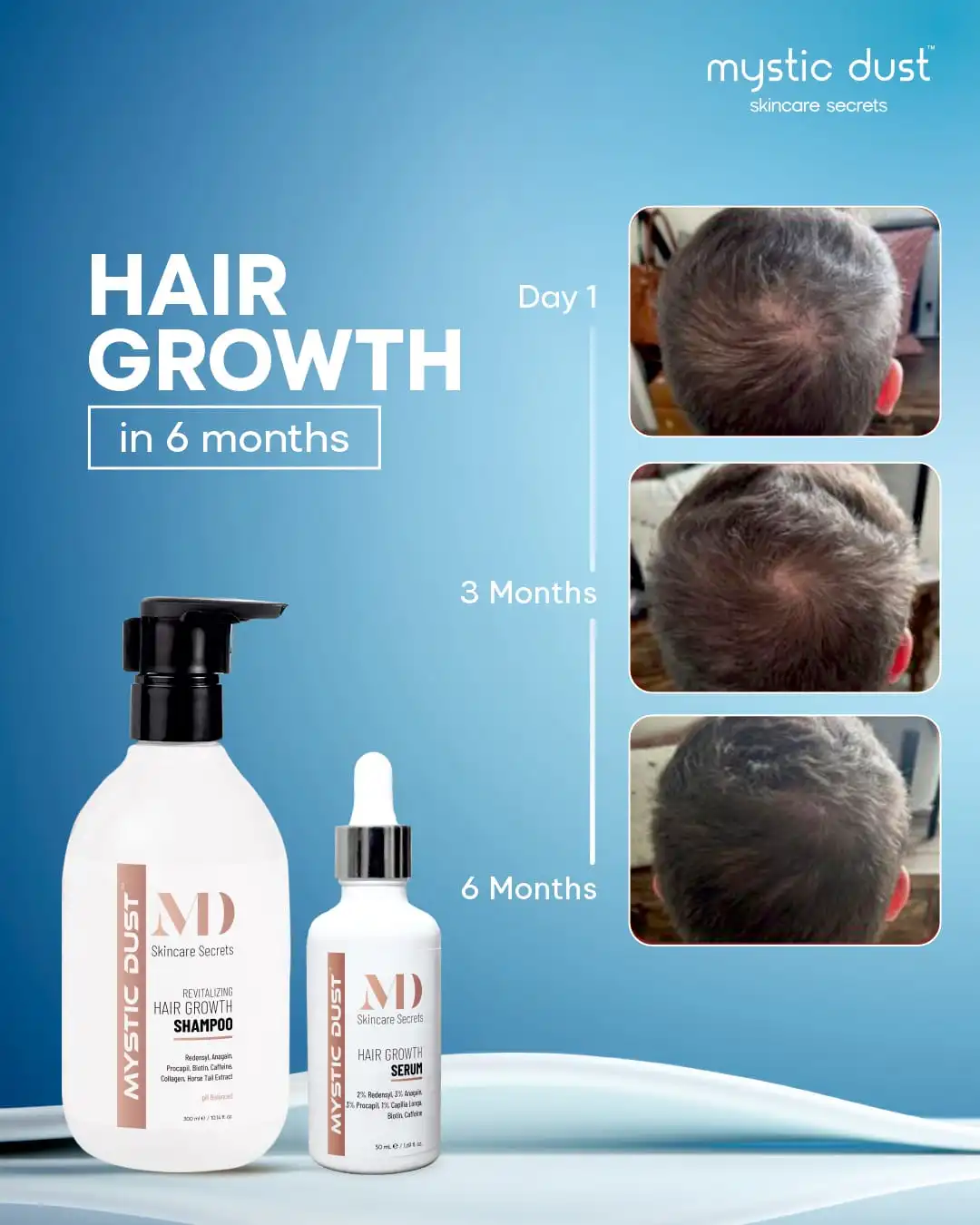
Anagain is a plant-derived active made from pea sprouts, used in both of Mystic Dust’s hair growth formulas. Here’s what...
Apple cider vinegar is a popular “hard water rinse” home remedy — here’s an honest, unhyped look at what the actual clin...
Beta-glucan is best known as an immune-supporting ingredient in food — but on skin, its job is different: helping the ba...
Biotin is one of the most talked-about hair ingredients — and one of the most overstated. Here’s what the research actua...
Bisabolol is the calming compound behind chamomile’s centuries-old reputation as a skin-soother — modern research is sta...
The same ingredient that wakes you up in the morning does something useful for skin and scalp too — but not quite everyt...
Roughly half your skin’s outer barrier is made of ceramides. When that supply runs low — from age, weather, or over-clea...
Tranexamic acid has real clinical evidence behind it for melasma and dark spots — Cetyl Tranexamate Mesylate is a lipid-...
Chemical (organic) UV filters absorb UV radiation and convert it to harmless heat — a different mechanism from mineral f...
“Exosomes” is one of the most-hyped words in skincare right now — here’s what plant-derived exosomes actually are, and a...
Climbazole is a widely used antifungal in dandruff formulations worldwide — here’s what the available science actually c...
Colloidal oatmeal has one of the strongest clinical trial track records of any soothing ingredient in skincare — includi...
Ectoin comes from bacteria that survive in salt lakes and deserts — extreme environments that taught it how to hold onto...
Ferulic Acid is best known as Vitamin C’s stabilizing partner — a plant-based antioxidant that boosts photoprotection wh...
Glycolic Acid is the best-known AHA exfoliant in dermatology — but almost all its clinical evidence comes from strong, i...
Green tea’s polyphenol content is one of the better-studied plant antioxidants in dermatology. Here’s what it actually d...
A plant-derived conditioning polymer that smooths and detangles hair by coating the strand — a well-understood cosmetic-...
Your skin already makes hyaluronic acid naturally — it’s one of the main reasons young skin looks plump and bouncy. Here...
Kakadu Plum is a native Australian superfruit with one of the highest vitamin C concentrations ever recorded in a plant...
Kojic acid has been a go-to skin-lightening ingredient for decades — but it’s also one where the real formulation challe...
Kumkumadi Oil is a centuries-old Ayurvedic formulation, and it now has real (if early) human clinical data behind it — h...
Licorice root’s active pigmentation-fighting compound, glabridin, works through several different mechanisms at once — h...
Lipomoist is a proprietary lipid-support complex — here’s what it’s meant to do, and an honest note on what evidence cur...
N-Acetyl Glucosamine (NAG) has one of the more solid independent clinical trials behind it among pigmentation ingredient...
One of the most well-studied actives in skincare — here's what niacinamide actually does for oil, tone and skin barrier,...
Panthenol has one of the longest clinical track records of any skincare ingredient — first used in dermatology in the 19...
Peptides are short chains of amino acids that signal skin to behave younger — here’s how the category performs in clinic...
Piroctone Olamine is one of the better-studied anti-dandruff actives available — with clinical trial evidence that goes...
Azelaic acid is a genuine dermatology-guideline ingredient for both acne and pigmentation — Potassium Azeloyl Diglycinat...
Procapil is a proprietary hair-care complex with a specific, limited evidence base — here’s exactly what’s been tested,...
Redensyl gets talked about a lot in hair growth marketing — sometimes with claims that go further than the evidence supp...
One of the most researched anti-ageing ingredients there is — and one of the most misused. Here's what retinol actually...
Salicylic acid is one of the few acne ingredients backed by major dermatology guidelines, not just skincare marketing. H...
Saw Palmetto has real, repeated clinical evidence for hair density — but almost all of it is for oral supplements, not t...
Squalane is a stabilized version of squalene, a lipid your own skin already produces as part of its natural oil. That’s...
Tea tree oil has been used as a natural antiseptic in Australia for generations — and it’s one of the few plant-derived...
Vitamin C is one of the most studied brightening and antioxidant ingredients in skincare — but the original form, L-asco...
Zinc oxide is a mineral UV filter that physically sits on the skin and reflects/scatters sunlight — one of the most trus...
Zinc has a long, well-studied track record for calming inflamed, acne-prone skin. Zinc PCA is the form Mystic Dust uses...

Copyright © 2024–2026, Oriens Health Pvt. Ltd. | All Rights Reserved




Give your friends a reward and claim your own when they make a purchase.