












 Aura-AI Assistant
Tea tree oil has been used as a natural antiseptic in Australia for generations — and it’s one of the few plant-derived acne ingredients with genuine head-to-head clinical trial data behind it.
Tea tree oil is an essential oil steam-distilled from the leaves of Melaleuca alternifolia, a tree native to Australia, long used as a topical antiseptic before becoming a common ingredient in modern acne and scalp care.
Oily, acne-prone skin — especially for people who find benzoyl peroxide or stronger acne actives too harsh. Also a common, well-tolerated ingredient for oily or itchy scalp concerns.
Always use it pre-diluted in a formulated product — undiluted tea tree essential oil applied directly to skin can irritate at high concentrations. Patch test if you’re new to it.
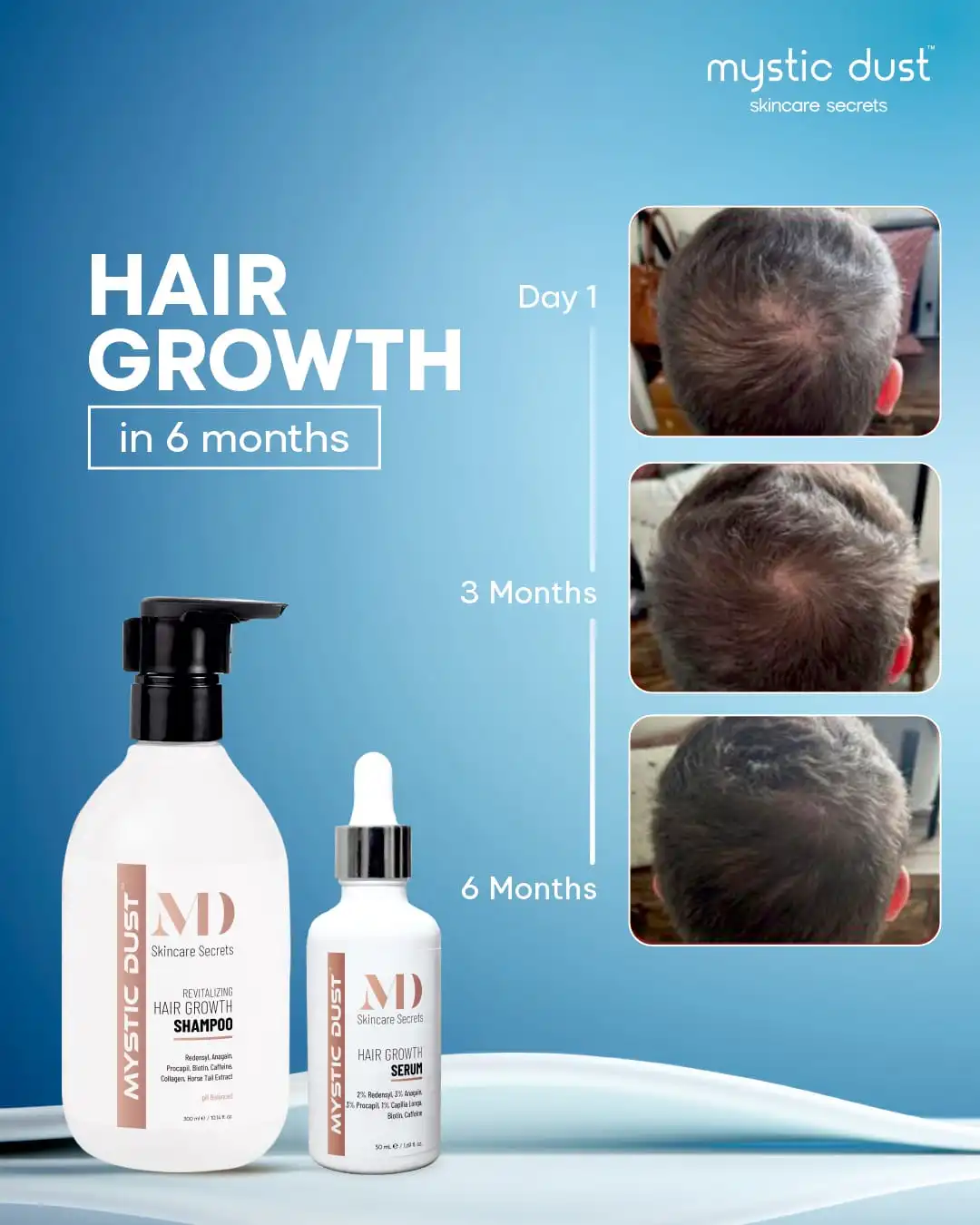
Formulated in Anti-Acne Face Wash, Hair Growth Shampoo, Scalp Reset Shampoo, Scalp Balance Anti-Dandruff Shampoo and Scalp Strength Hair Growth Shampoo.
Salicylic Acid, Zinc PCA, Niacinamide — already co-formulated with it in Mystic Dust’s acne and scalp-care products.
Other strong essential oils, or high concentrations of exfoliating acids in the same routine — combining several can compound irritation on sensitive skin.
According to PubMed: -
Nascimento T, Gomes D, Simões R, da Graça Miguel M. “Tea Tree Oil: Properties and the Therapeutic Approach to Acne-A Review.” Antioxidants, 2023;12(6):1264. DOI
Bassett IB, Pannowitz DL, Barnetson RS. “A comparative study of tea-tree oil versus benzoylperoxide in the treatment of acne.” Medical Journal of Australia, 1990;153(8):455-458. DOI
Hammer KA. “Treatment of acne with tea tree oil (melaleuca) products: a review of efficacy, tolerability and potential modes of action.” International Journal of Antimicrobial Agents, 2014;45(2):106-110. DOI

Copyright © 2024–2026, Oriens Health Pvt. Ltd. | All Rights Reserved




Give your friends a reward and claim your own when they make a purchase.