
What Is Tea Tree Oil? Benefits, Uses and Side Effects
Tea tree oil is an essential oil made from the leaves of an Australian plant called Melaleuca alternifolia. It has natural germ-fighting properties, so you'll find it in face washes, gels and shampoos made for pimples and dandruff. It works best when it's diluted inside a well-made product. Pure oil on bare skin can sting, burn or trigger an allergy.
If you've spotted it on a label and wondered whether it's worth it, this guide is for you. We'll cover what it is, what the research actually shows, how to use it, and who should be careful.
Quick answers
- Best evidence: mild to moderate acne and dandruff.
- Weak evidence: hair growth. Don't buy it for that.
- Never: swallow it, use it neat on skin, or let it near your eyes.
- Smartest way to use it: inside a formulated face wash or shampoo, not as raw oil.
What Is Tea Tree Oil and How Is It Made?
Tea tree oil comes from the leaves and thin branch tips of Melaleuca alternifolia, a plant native to Australia. It is not related to the tea plant used for chai or green tea. So don't brew it and don't drink it.
The oil is made by steam distillation. Steam passes through the leaves and carries the plant's tiny oil droplets with it. The vapour is cooled, the oil floats on the water, and it is collected. What you get is a strong, fresh, slightly medicinal-smelling oil. The key word is concentrated.
Its main active compound is called terpinen-4-ol. This is what gives tea tree oil its antimicrobial action.
One thing that confuses people: some products list tea tree extract instead of tea tree oil. An extract is made by pulling compounds out of the plant with a solvent, so it is a different preparation from the distilled oil. The ingredient list on the label tells you which one is used.
What Does the Research Say About Tea Tree Oil?
Not every claim about tea tree oil is equally strong. Here is the honest picture.
| Use | What studies found | How strong is the evidence? |
|---|---|---|
| Acne | In a trial of 124 people, a 5% tea tree oil gel reduced both inflamed and non-inflamed pimples, about as well as 5% benzoyl peroxide lotion. It worked more slowly but caused fewer side effects. An independent review agreed it helps, but said study designs vary too much to give an exact effect size. | Moderate. Real trials, but older and mixed in quality. |
| Dandruff | In a 4-week trial of 126 people with mild to moderate dandruff, a 5% tea tree oil shampoo used daily improved dandruff scores by 41%, against 11% for a placebo shampoo. Itching and greasiness improved too. No side effects were reported in that study. | Moderate. One well-known trial, so more research would help. |
| Hair growth | We could not find solid human trials showing that tea tree oil grows hair or stops hair fall. | Not established. |
| Foot, nail and body odour care | Commonly used in products. The evidence is limited and mixed. | Limited. |
Those studies used 5% tea tree oil inside finished products. That doesn't mean 5% suits everyone's skin, and it doesn't mean pure oil is better. A formulated product is made to deliver the oil in a safe, stable amount.
Benefits of Tea Tree Oil for Skin and Scalp
1. It may help with mild to moderate acne. Tea tree oil has antibacterial and anti-inflammatory properties. In studies, it reduced pimples without the dryness many people get from stronger acne treatments. It works slowly, so give it weeks, not days.
2. It may help with dandruff and an itchy scalp. Dandruff is linked to a yeast that lives on most scalps. Tea tree oil has antifungal activity, and in the trial above, shampoo with it reduced flaking, itching and greasiness.
3. It's a good team player in oily-skin formulas. On its own, tea tree oil isn't a full acne treatment. In good products it sits next to ingredients like salicylic acid and zinc PCA, and each one does a different job.
4. A calmer scalp protects the hair you already have. Heavy scratching and an irritated scalp can lead to extra shedding. Settling dandruff helps with that. It's not the same as growing new hair, which tea tree oil has not been shown to do. If hair fall is your main worry, read what causes hair thinning first.
How to Use Tea Tree Oil Safely
For pimples and oily skin
Pick a face wash or gel made with tea tree, not raw oil. Wash-off products sit on the skin for less time, so they are gentler. Start with once a day, patch test first, and use sunscreen every morning like you would with any acne routine. Don't dab neat oil on a pimple. That is the quickest way to get a red, peeling spot.
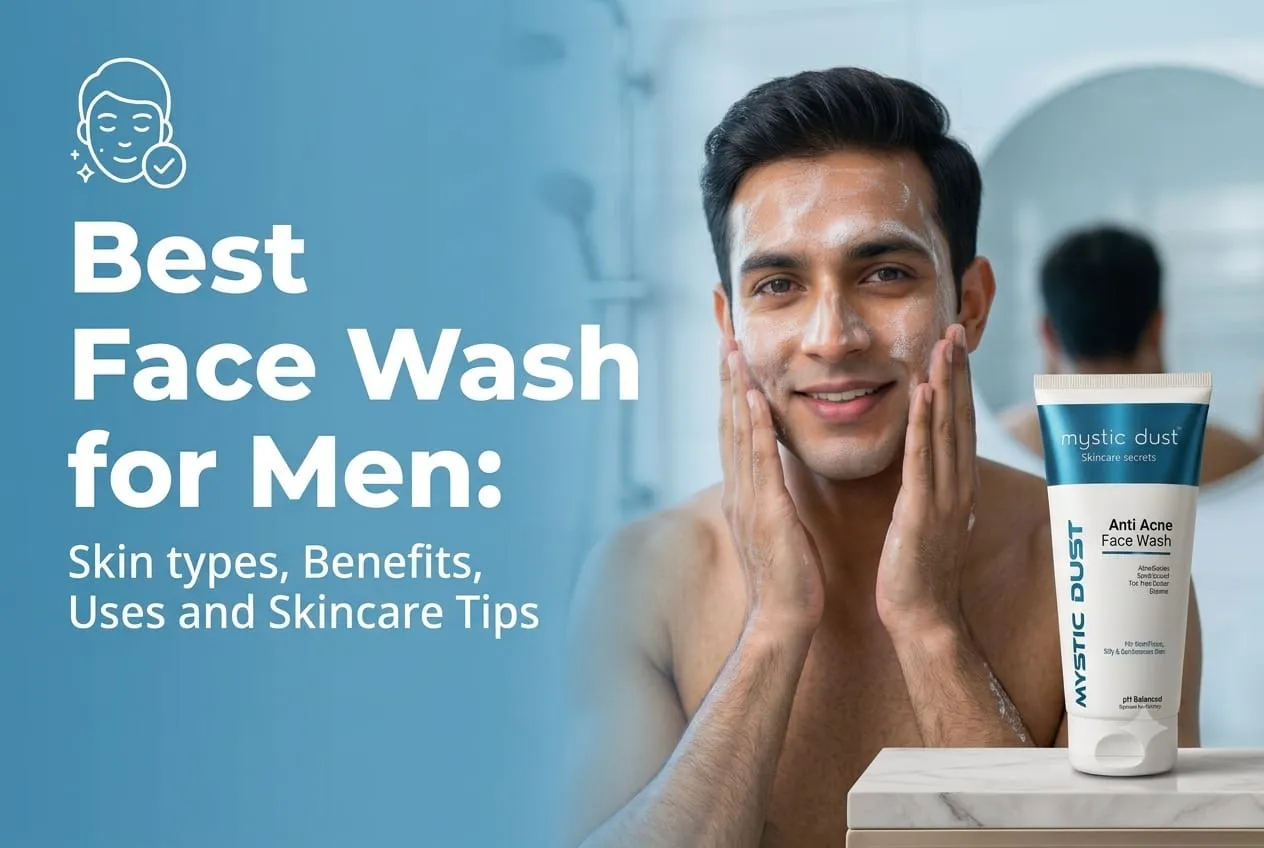
Our Anti-Acne Face Wash is built this way, with tea tree extract next to 1% salicylic acid.
For dandruff and an itchy scalp
- Wet your hair and massage the shampoo into your scalp, not just the hair.
- Leave it on for 2 to 3 minutes.
- Rinse very well.
- Use it 2 to 3 times a week to start. Give it about 4 weeks before you judge it, since that's how long the trial ran.
If you already have a bottle of pure tea tree oil
Never apply it neat. Mix 2 to 3 drops into 1 tablespoon (15 ml) of a carrier oil like coconut or jojoba oil. That's roughly a 1% mix. Apply a small amount, keep it away from your eyes, leave it for a few minutes, then wash it off.
How to do a patch test
- Put a small amount of the product (or your diluted mix) on your inner forearm.
- Leave it for 24 hours.
- If you see redness, itching or burning, don't use it.
What Are the Side Effects of Tea Tree Oil?
Used the wrong way, tea tree oil can cause:
- Redness, dryness and stinging
- Itching or a burning feel
- Allergic contact dermatitis (a rash after skin contact)
- Worse scalp itching if the oil is too strong
- Eye irritation if it gets in your eyes
Swallowing tea tree oil is dangerous. Even a small amount can cause poisoning. It is for external use only.
Why old tea tree oil is riskier
When tea tree oil is exposed to air and light for long, it breaks down. One compound that forms, called ascaridole, is a known skin sensitiser. In a patch-test study of 319 people with eczema, more people reacted as the ascaridole level went up. So store your bottle in a cool, dark place with the cap tightly shut. If it smells sharper or different from when you bought it, throw it away.
Who should be extra careful
- Pregnant or breastfeeding: speak to your doctor first.
- Sensitive skin, eczema or open wounds: avoid it, or ask a doctor or dermatologist first.
- Children and pets: keep it out of reach.
When to see a doctor
- Dandruff hasn't improved after 4 weeks of regular use.
- Your scalp is red, sore or oozing, or you notice patchy hair loss.
- Acne is painful, deep, or leaving marks.
Tea Tree Oil vs Other Acne and Dandruff Ingredients
Tea tree oil is usually one part of a formula, not the whole answer. Here is how it compares.
| Ingredient | What it mainly does | Good to know |
|---|---|---|
| Tea tree oil | Antimicrobial and calming | Gentler, but slower to work |
| Salicylic acid | Clears oil and dead skin from inside the pore | Can dry skin if overused |
| Zinc PCA | Helps balance oil | Gentle, pairs well with tea tree |
| Piroctone olamine | A well-established anti-dandruff active | Used in many anti-dandruff shampoos |
| Climbazole | Another anti-dandruff active | Often paired with piroctone olamine |
Natural also doesn't mean always safer. Tea tree oil is a good example. Read more in our skincare myths and facts guide.
How Mystic Dust Uses Tea Tree
Mystic Dust is an Indian skincare and haircare brand. We use tea tree where the evidence is strongest: acne-prone skin and scalp care.
- For acne-prone and oily skin: our Anti-Acne Face Wash combines 1% Salicylic Acid, tea tree extract, our AcneBusters™ blend and Betaine. It's sulfate-free, so it cleans without leaving skin tight.
- For dandruff and an itchy scalp: our scalp shampoos pair tea tree with anti-dandruff actives such as Piroctone Olamine.
Want to know more about the ingredient itself? See our tea tree oil ingredient guide.
Shop Anti-Acne Face Wash → Explore Dandruff & Scalp Care →
Not sure what your skin needs? Build my routine →
Conclusion
Tea tree oil is a useful ingredient with real, if limited, evidence for acne and dandruff. It isn't a hair-growth treatment, and it isn't something to put on your skin neat. Choose it inside a well-made product, patch test, and be patient. Most changes show up over weeks.
This guide is for education. It does not replace medical advice. See our Disclaimer.