
Hyperpigmentation Serum: Benefits, Ingredients, and How to Choose the Right One
Introduction
Dark spots don't show up overnight, and they don't fade overnight either. Whether it's a stubborn patch left behind by an old pimple, sun spots from years of stepping out without SPF, or general unevenness that's crept in over time, a hyperpigmentation serum is usually the first thing people reach for — and also the thing most people pick wrong.
Not every brightening serum on the shelf is actually built for pigmentation. Some are formulated for glow and hydration and just borrow the word. Others use one active at a strength too low to do much. A serum that's genuinely built for hyperpigmentation targets melanin production directly — through ingredients like Niacinamide, Vitamin C, Alpha-Arbutin, or (for more stubborn cases) prescription-strength options a dermatologist would guide you on.
Here's what a hyperpigmentation serum actually does, which ingredients are worth looking for, how to pick one for your specific skin, and what's genuinely in Mystic Dust's own formulas.
What Is a Hyperpigmentation Serum?
Hyperpigmentation happens when your skin produces too much melanin in one spot — usually triggered by sun exposure, inflammation (like a healing pimple), hormonal changes, or skin injury. That extra melanin shows up as a darker patch that doesn't fade on its own nearly as fast as you'd like.
A hyperpigmentation serum is a concentrated, lightweight formula built to interrupt that process — either by slowing down how much melanin your skin makes, or by supporting faster skin renewal so the darker cells get replaced sooner. It's not a spot-eraser you apply once and see results from the next morning. It's an active ingredient working gradually, over weeks of consistent use.
What a Hyperpigmentation Serum Can (and Can't) Do
It can:
- Help fade the look of dark spots, sun spots and post-acne marks over time
- Even out overall skin tone
- Support skin renewal, which helps existing pigmentation clear faster
It can't:
- Remove pigmentation overnight or in a few days
- Undo years of sun damage without consistent sunscreen use alongside it
- Replace a dermatologist's guidance for melasma or deep, stubborn pigmentation
Being upfront about this matters more than it sounds — the single biggest reason people give up on a genuinely good serum is expecting week-one results from an ingredient that needs six.
Key Ingredients That Help Reduce Hyperpigmentation
Vitamin C — an antioxidant that helps protect skin from the oxidative stress (sun exposure, pollution) that makes existing pigmentation worse, while also supporting a brighter-looking complexion.
Niacinamide (Vitamin B3) — helps reduce how much pigment gets passed from melanin-producing cells to the surface of your skin, which is part of why it's such a common pairing with brightening actives.
Azelaic Acid — well suited to pigmentation caused by acne or inflammation (called post-inflammatory hyperpigmentation), since it works on both the pigmentation and the underlying inflammation.
Alpha Hydroxy Acids (AHAs) — Lactic Acid and Glycolic Acid work by gently exfoliating, helping surface pigmented cells shed faster. These can be more irritating than the actives above, so they're usually introduced slowly.
Retinoids — increase skin-cell turnover, which helps pigmented cells get replaced faster. Genuinely effective, but also the most likely of this group to cause dryness or irritation if you're not used to them.
Full ingredient science: Niacinamide, explained · Vitamin C, explained
Other Pigment-Targeting Ingredients
Alpha-Arbutin — a gentler, plant-derived brightening active that works by slowing melanin production, generally well-tolerated even on sensitive skin.
Kojic Acid — another melanin-inhibiting ingredient, often used in combination with other actives rather than on its own.
Hydroquinone — the strongest depigmenting ingredient available, and a prescription-strength option in India — it needs a dermatologist's guidance, not a DIY approach. It's not something you'll find in an over-the-counter cosmetic serum, and for good reason: used incorrectly, it carries real risk of irritation and rebound pigmentation.
What's Actually in Our Formulas
It's easy for a page like this to list every pigmentation ingredient that exists and let you assume all of them are in every product, including ours. Here's what's honestly true for Mystic Dust, ingredient by ingredient, from the list above:
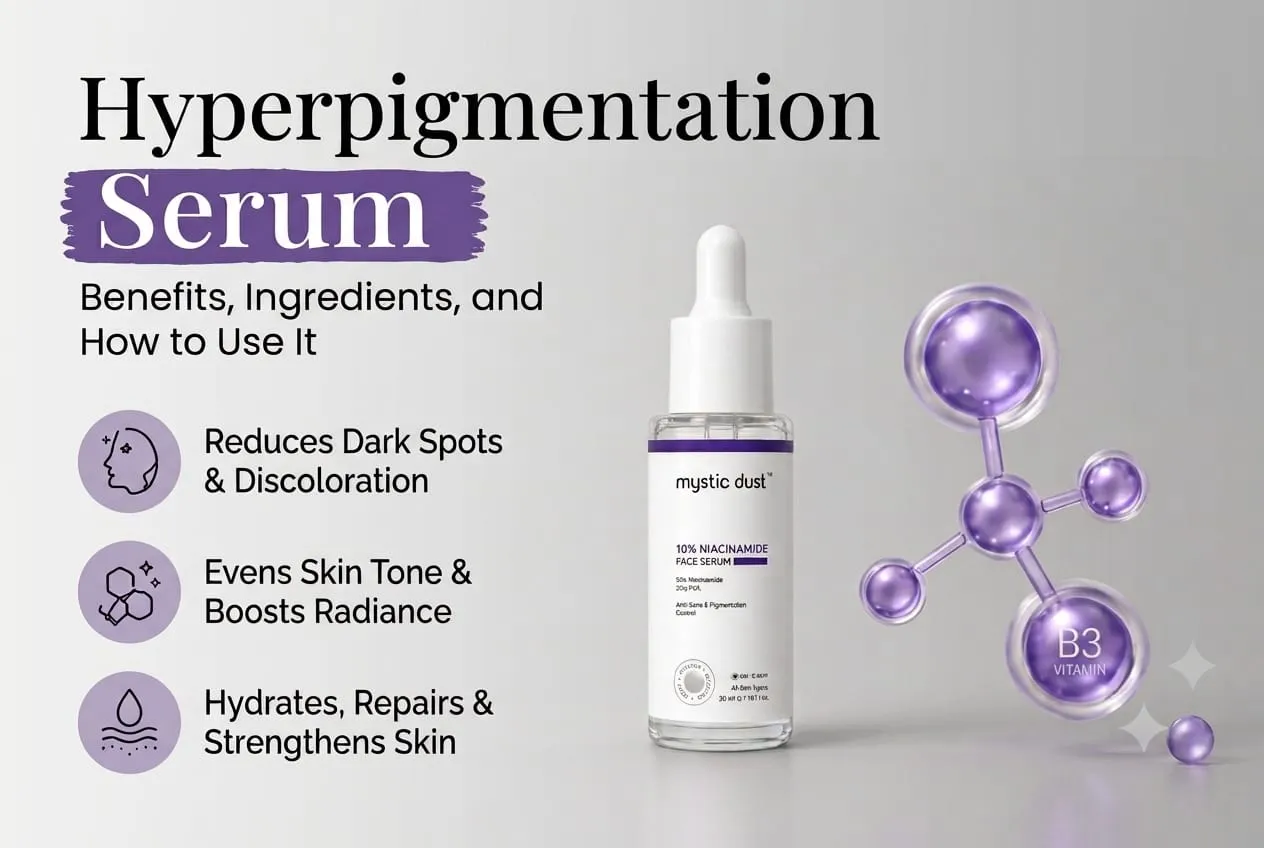
- Niacinamide, Alpha-Arbutin, and a verified Azelaic Acid derivative (Potassium Azeloyl Diglycinate) are all genuinely part of our 10% Niacinamide Face Serum formulation.
- Vitamin C (3-O-Ethyl Ascorbic Acid, a more stable derivative), Kakadu Plum and Ferulic Acid are the actives in our 10% Vitamin C Face Serum.
- AHAs are not currently a positioned active in any Mystic Dust formula. If you're specifically looking for an exfoliating acid-based pigmentation approach, that's genuinely not what either of the serums above is built to do.
- Kojic Acid is not yet in any live Mystic Dust product. It's confirmed for our upcoming Pigment Reset – Advanced Anti-Pigmentation Serum, launching later this year — we'll update this page once that's live.
- Retinol is available separately, in our Retinol Face Serum (0.3% Encapsulated Retinol) — this is an Anti-Ageing pillar product, not a pigmentation-specific one, but genuinely useful for cell turnover if pigmentation is part of what you're addressing. If you use it alongside Vitamin C, keep them in separate routines — Vitamin C in the morning, Retinol at night, not applied together in the same sitting.
- We don't carry Hydroquinone, and wouldn't recommend using it without a dermatologist's prescription and supervision regardless of the brand.
How to Choose the Right Hyperpigmentation Serum for Your Skin
Sensitive skin: Start with Azelaic Acid or Niacinamide — both are generally well-tolerated and less likely to cause the stinging or peeling that stronger acids or Retinoids can.
Oily or acne-prone skin: Look for a lightweight, non-comedogenic formula. Niacinamide is a strong fit here since it also helps manage oil.
Dry skin: Avoid layering too many exfoliating actives at once. Vitamin C paired with a hydrating base (like Hyaluronic Acid) tends to work better than AHA-heavy formulas, which can be drying.
Melasma or deep, stubborn pigmentation: This is the one case where we'd genuinely recommend seeing a dermatologist before self-treating with any serum — melasma responds differently to actives than sun spots or acne marks do, and getting it wrong can make things worse. Our Disclaimer page has more on when a product recommendation should take a back seat to professional advice.
Whatever you choose, sunscreen isn't optional. Every pigmentation-fading active on this page works against new sun exposure, not instead of it — skip the SPF, and you're refilling the spot you're trying to fade.
How to Use a Hyperpigmentation Serum for the Best Results
- Cleanse with a gentle, non-stripping face wash.
- Apply the serum — a few drops on clean, dry skin, avoiding the eye area.
- Moisturize to lock it in and keep skin comfortable.
- Sunscreen, every morning, no exceptions. This is the step that decides whether your progress sticks or gets undone.
Use once or twice daily depending on the active (Niacinamide and Vitamin C are generally fine for twice-daily use; introduce Retinoids and stronger acids gradually, starting a few nights a week).
What to Expect, and When
Consistent with what's already established across our other pigmentation-focused products: most people start noticing less visible dark spots and a more even tone within 4-6 weeks of daily use. Fuller, more noticeable improvement in tone and texture generally builds by 8-12 weeks. This varies by skin, by which active you're using, and — more than anything — by whether sunscreen is part of the routine every single day.
Common Mistakes to Avoid
- Skipping sunscreen. The single biggest reason a good serum doesn't seem to work.
- Using too many actives at once. Layering Vitamin C, Retinol, and an AHA all in the same routine usually means irritation, not faster results.
- Expecting results in days. Pigmentation fades in weeks, not days — consistency beats intensity here.
- Applying more than needed. A few drops is enough; more product doesn't mean faster fading.
- Picking or squeezing acne. This is one of the most common causes of new pigmentation — treating existing spots while creating new ones cancels out your own progress.
- Ignoring irritation. Redness, stinging or peeling means it's time to slow down, not push through.
- Using prescription-strength treatments without guidance. Hydroquinone and similar strong actives need a dermatologist, not a Google search.
A Simple Daily Routine for Even-Toned Skin
Morning: Cleanse → Pigmentation serum (Niacinamide or Vitamin C) → Moisturize → Sunscreen
Evening: Cleanse → Pigmentation serum → Moisturize
Consistency matters more than complexity. A simple two-step active routine, followed every day, will outperform a five-step routine used twice a week.
Conclusion
A hyperpigmentation serum works — but only if you pick the right active for your skin, use it consistently, and never skip sunscreen. Niacinamide and Vitamin C are the two most versatile, best-tolerated options for most people, which is why they're the foundation of our own pigmentation formulas.
Our 10% Niacinamide Face Serum targets dark spots and uneven tone directly. Want the complete routine, sunscreen included? Try the Pigmentation Control Routine.
Shop the Pigmentation Control Routine →