
Hair Thinning: Causes, Treatment, and What Actually Helps
Introduction
Noticing more scalp when you part your hair, or a ponytail that feels thinner than it used to? That's hair thinning — and it's one of the most common hair concerns people search for answers on, because it can come from so many different places.
Thinning hair isn't the same as baldness. Baldness means a patch of scalp with no hair at all. Thinning means the hair you have is getting finer, weaker, and less dense over time — which also means it's usually easier to slow down or reverse than people assume, once you know what's actually causing it.
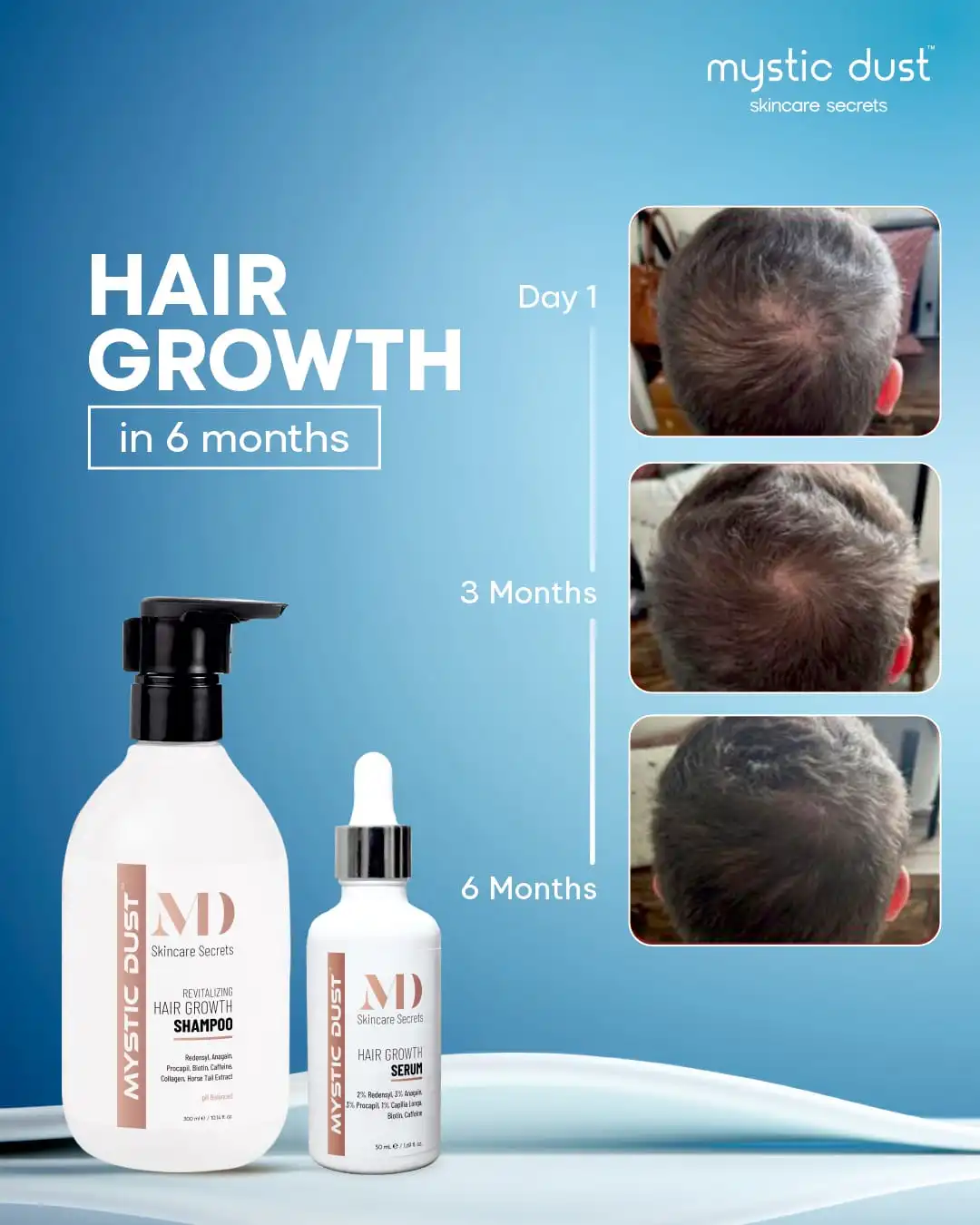
This guide covers the real causes, what you can do about it at home, when it's worth seeing a professional, and where a targeted routine like Mystic Dust's Hair Growth Serum and Shampoo actually fits in.
What Is Hair Thinning?
Hair thinning is a gradual drop in hair volume and density — the strands themselves get smaller, weaker, and fewer in number. Common signs include:
- Less overall volume, even with the same amount of hair
- A visibly wider parting
- Scalp showing through under bright light
- More hair than usual in your brush, comb, or shower drain
- Strands that feel finer or weaker than before
What Causes Hair Thinning
1. Genetics. Family history is one of the most common reasons for thinning hair, especially the gradual, pattern-based kind. If your parents or grandparents dealt with thinning hair, you're more likely to as well.
2. Hormones. Pregnancy, menopause, thyroid problems, and PCOS can all shift hormone levels enough to disrupt the hair growth cycle and cause visible thinning.
3. Nutrient deficiency. Low iron, Vitamin D, biotin, zinc, or protein intake are all linked to weaker, thinner-growing hair. This is one of the more fixable causes, since it usually responds to diet changes.
4. Stress and lifestyle. Ongoing physical or emotional stress can push more hair follicles into their resting phase at once — a condition called telogen effluvium. Poor sleep, smoking, and a nutrient-poor diet all add to this.
5. Scalp health. Dandruff, scalp inflammation, fungal infections, and excess oil buildup all interfere with a healthy environment for hair to grow in. If dandruff or an itchy, flaky scalp is part of the picture, Mystic Dust's Scalp Reset Shampoo is formulated specifically for that.
6. Heat and chemical damage. Frequent flat-ironing, curling, coloring, and chemical treatments weaken hair at the strand and root level over time.
How to Fix Thinning Hair — Step by Step
Step 1: Eat right. Add protein, iron-rich foods, leafy greens, nuts, and biotin-rich foods like eggs to your diet. Biotin specifically supports hair strength — it's also one of the actives in Mystic Dust's Hair Growth Serum and Hair Growth Shampoo, so you're covering the same base from both diet and your routine.
Step 2: Maintain your scalp health. Use a mild, sulfate-free shampoo, avoid harsh chemical treatments, and massage your scalp regularly to support circulation. Mystic Dust's Hair Growth Shampoo is formulated for this — sulfate-free, with Redensyl, Anagain, Procapil and Biotin built in, so your everyday wash is doing more than just cleaning.
Step 3: Reduce heat styling. Cut back on flat irons and curling irons where you can, and avoid tight hairstyles that pull on the hairline.
Step 4: Manage stress. Exercise, meditation, consistent sleep, and general stress reduction all genuinely help keep more follicles in their active growth phase.
Step 5: Seek a professional consultation. If thinning continues despite the steps above, or you notice sudden or patchy loss, a dermatologist can identify the actual cause rather than you guessing at it.
Building a Thinning-Hair Routine With Mystic Dust
Once diet and scalp care are handled, a targeted serum and shampoo combination can support the growth cycle directly. Mystic Dust's Hair Growth Serum and Hair Growth Shampoo are both formulated with Redensyl, Anagain, Procapil, Capilia Longa, Biotin and Encapsulated Caffeine — chosen to support the hair growth cycle from a few different angles rather than relying on one ingredient alone.
If you'd rather start with both together, the Hair Growth Routine bundles the serum and shampoo. As with any hair growth routine, consistency matters more than any single product — most people notice less shedding within a few weeks, with visible density improvements typically building over 8–12 weeks of regular use.
Professional Treatment Options
If home care and a consistent routine aren't enough on their own, a dermatologist may discuss the following, depending on what's causing your thinning:
PRP Therapy (Platelet-Rich Plasma): uses growth factors from your own blood, injected into the scalp, to support hair follicles.
Low-Level Laser Therapy (LLLT): a light-based treatment thought to improve blood flow to the scalp.
Mesotherapy: delivers nutrients directly into the scalp through micro-injections.
Prescription medication: certain medications, prescribed and monitored by a dermatologist, are used for specific types of hair thinning.
These are clinical procedures administered by a qualified professional — not something to try on your own, and not something Mystic Dust provides directly. Whether any of them makes sense for you depends on the cause and severity of your thinning, which is exactly what a dermatologist consultation is for.
At-Home Remedies Worth Trying
- Coconut oil scalp massage — helps with circulation and can feel soothing
- Aloe vera — often used to soothe scalp irritation
- Rosemary essential oil, diluted in a carrier oil before use
- Protein-rich hair masks
These are supportive, low-risk additions to a routine — not a replacement for addressing the actual cause of your thinning.
When to See a Dermatologist
Most gradual thinning responds well to diet, scalp care, and a consistent routine. It's worth booking a dermatologist visit if:
- Thinning is sudden or happening in patches, rather than gradual
- You notice scalp pain, redness, or persistent itching alongside the hair loss
- Home care and a consistent routine haven't made a difference after a few months
Related Reading
- The Hair Growth Cycle: Phases, Normal Shedding, and What Helps
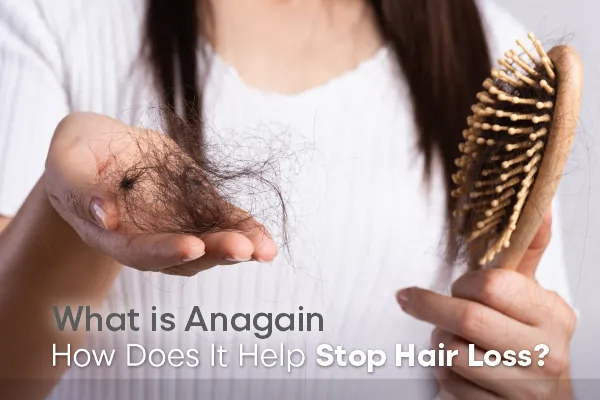
- What Is Anagain and How Does It Help Stop Hair Loss?
- Hair Growth Serum Guide: Key Ingredients & How to Use It
Start with the Hair Growth Serum, or get shampoo and serum together with the Hair Growth Routine. Dealing with dandruff or a flaky scalp too? Scalp Reset Shampoo is built for that.