
- 15-Dec 2024
- Dr. Vivek Setia
- Share












 Aura-AI Assistant
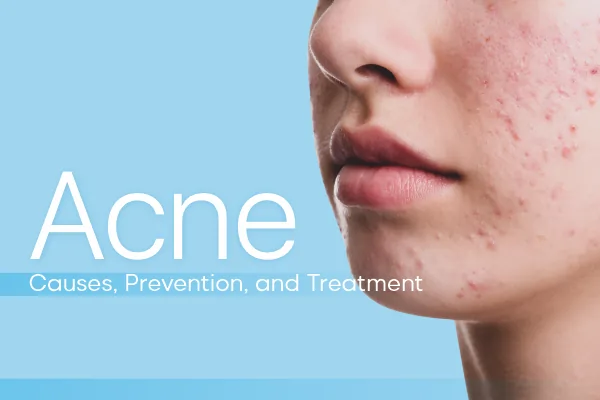
Acne happens when your pores get blocked with oil, dead skin cells, and dirt, which then creates the perfect environment for bacteria to grow and cause inflammation. That's it — that's the whole mechanism behind pimples, blackheads, whiteheads, and the deeper, more painful cysts some people get.
What makes acne frustrating is that it's rarely just one cause. Most people dealing with regular breakouts have two or three of these things happening at once — extra oil production, hormonal shifts, a build-up of dead skin cells, and sometimes diet or stress on top of it. Once you know which of these apply to you, choosing the right routine gets a lot less like guesswork.
Topical ingredients are usually the first line of treatment, and each one works a little differently:
For more stubborn or severe acne, a dermatologist may prescribe antibiotics, hormone regulators, or Vitamin A derivatives — these need medical supervision and aren't something to self-prescribe.
Professional, in-clinic treatments like chemical peels, laser therapy, and extraction facials can help with both active acne and the marks it leaves behind, usually alongside a consistent at-home routine rather than instead of one.
Once a breakout heals, it often leaves a flat dark or red mark behind — this isn't a scar, and it usually fades on its own, but it takes time and the right ingredients speed things up. Look for a serum with Niacinamide, Zinc PCA, and Alpha-Arbutin — Mystic Dust's 10% Niacinamide Face Serum is built around exactly this combination, specifically to fade post-acne marks after the active breakout has settled.
Daily sunscreen matters just as much here as the serum does — sun exposure is one of the biggest reasons post-acne marks take longer to fade, since UV makes existing pigmentation darker and slower to clear.
Home care and over-the-counter products handle most acne, but it's time to see a dermatologist if:
Acne is one of the most common skin conditions there is, and it's also one of the most treatable — once you understand what's actually causing yours, preventing future breakouts and clearing the ones you have gets a lot more manageable.
Q. What causes acne on the face?
A. A mix of excess oil, clogged pores, dead skin build-up, and bacteria (Cutibacterium acnes) growing inside blocked pores. Hormones, diet, and environment can all make it worse.
Q. Does diet really affect acne?
A. For some people, yes — high-sugar and heavily processed foods are linked to more breakouts. It's not the same for everyone, but if you notice your skin reacting to certain foods, it's worth cutting back.
Q. Can I get rid of acne without seeing a doctor?
A. Many cases respond well to a consistent routine — a gentle cleanse, targeted actives like Salicylic Acid or Niacinamide, and sun protection. See a dermatologist if it's severe, painful, or not improving after 8–12 weeks of consistent care.
Q. How long does it take for acne treatment to work?
A. Most people notice less oiliness and fewer new breakouts within 2–4 weeks. Visible improvement in existing acne and post-acne marks usually takes 6–8 weeks of consistent use.
Q. Will my acne leave permanent marks?
A. Not usually. Most post-acne marks are flat discoloration, not true scarring, and fade over weeks to months — faster with a targeted serum and daily sunscreen.
Q. Chehre par acne kyun hoti hai?
A. Zyada oil, band pores, dead skin cells, aur bacteria (Cutibacterium acnes) — inn sabka combination acne ka main reason hai. Hormones, diet aur stress bhi isse aur badha sakte hain.
Start with the Anti-Acne Face Wash, or get the complete routine with the Acne Control Routine — Salicylic Acid cleanser, Niacinamide serum, and sunscreen, all in one.

Copyright © 2024–2026, Oriens Health Pvt. Ltd. | All Rights Reserved




Give your friends a reward and claim your own when they make a purchase.